
Participation Is Not a Program — It's a Practice
A reflection on shared authority and the everyday practice of democracy

This essay is part of a series adapted from my 2025 keynote and article for the German Museums Association on museums and democracy.
The beginnings of 2026 have been marked by conflict, grief, and deep civic tension across the United States. Federal immigration enforcement actions and the violence surrounding them have shaken communities from Minneapolis to my own hometown of Portland. These events have intensified already difficult conversations about civil rights, democratic accountability, and the role of public institutions in moments of crisis.
In response to this turbulent moment, Elizabeth Alexander, President of the Mellon Foundation, reflected on the responsibility of the arts and humanities to help society navigate periods of division and uncertainty. She noted:
“Coming so swiftly on the heels of a year that had sharpened civic tensions and shaken the foundations of our democracy, the devastating start to 2026 urgently demands pause and reflection—and more significantly, moral clarity.”
In her piece, Alexander also reminds us that the arts and humanities cultivate the tools that democracy depends on: the ability to think critically, communicate across difference, and understand complex histories.
These words resonate deeply for those of us working in museums, cultural organizations, and nonprofits. Museums are not separate from the social and political environments around them; they are embedded within them. The choices we make about participation, collaboration, and community relationships shape how people experience civic life, even if those choices unfold quietly in galleries, classrooms, and meeting rooms rather than headlines.
In earlier posts in this series, I recalled the myth of neutrality and the responsibility of museums to acknowledge the values embedded in their work. The next step in that conversation asks a more practical question: what does democratic practice actually look like inside our institutions?
One place many museums begin is with participation. And that instinct is an important one.
But participation, by itself, is not the same thing as democracy.
The difference between engagement and shared power
Museums are very good at designing engagement.
We invite people in.
We ask for feedback.
We host workshops.
We gather input.
These efforts matter. They create opportunities for dialogue and connection. But engagement is not the same thing as shared authority.
Engagement asks people to respond to structures we have already built. Shared authority invites people to shape those structures from the beginning.
The difference is subtle — and profound.
Who defines the problem?
Who frames the question?
Who decides what counts as knowledge?
Who makes the final call?
If those answers never shift, then participation becomes performance.
Democracy asks for more than performance.
Power is not redistributed by accident
This is where the work becomes more challenging. Institutions, including museums, are not naturally designed to share power. Over time they develop systems—governance structures, professional hierarchies, budget processes, curatorial authority—that stabilize decision-making and protect institutional continuity.
Those systems are not inherently wrong. They help organizations function. But they also shape who gets to influence outcomes and whose voices remain peripheral.
Because of this, more participatory practice rarely emerges by accident. It requires intentional shifts in how decisions are made and who is invited into those processes.
When museums talk about participation, we sometimes focus on the visible parts of engagement—public programs, advisory councils, or co-created exhibitions. Those efforts can be meaningful, but they do not necessarily alter where authority ultimately sits. Inviting community members to contribute stories to an exhibition is different from inviting them into conversations about institutional priorities, budgets, staffing, or long-term strategy.
Recognizing this distinction does not mean institutions must suddenly dismantle their structures. It means acknowledging that participation becomes transformative only when it touches the places where decisions actually happen.
What this can look like in practice
The encouraging news is that meaningful change often begins with small but deliberate shifts. It does not require dramatic institutional upheaval. More often, it begins with structural humility.
It might look like bringing community partners into early planning conversations rather than inviting feedback after decisions are largely settled.
It might mean compensating collaborators equitably, recognizing that community expertise and knowledge deserves the same respect as professional expertise and academic knowledge.
In some cases, it means giving advisory groups real authority over specific decisions rather than positioning them as symbolic participants. It might involve rewriting job descriptions to recognize lived experience and community knowledge alongside academic credentials. It could mean opening certain budget conversations to broader staff participation or sharing evaluation findings transparently—even when those findings reveal uncomfortable truths about what is or is not working.
None of these actions are particularly flashy. They rarely generate headlines or press releases. But over time they build something far more important: trust.
And trust, in many ways, is democratic infrastructure.
Learning from institutions already doing this work
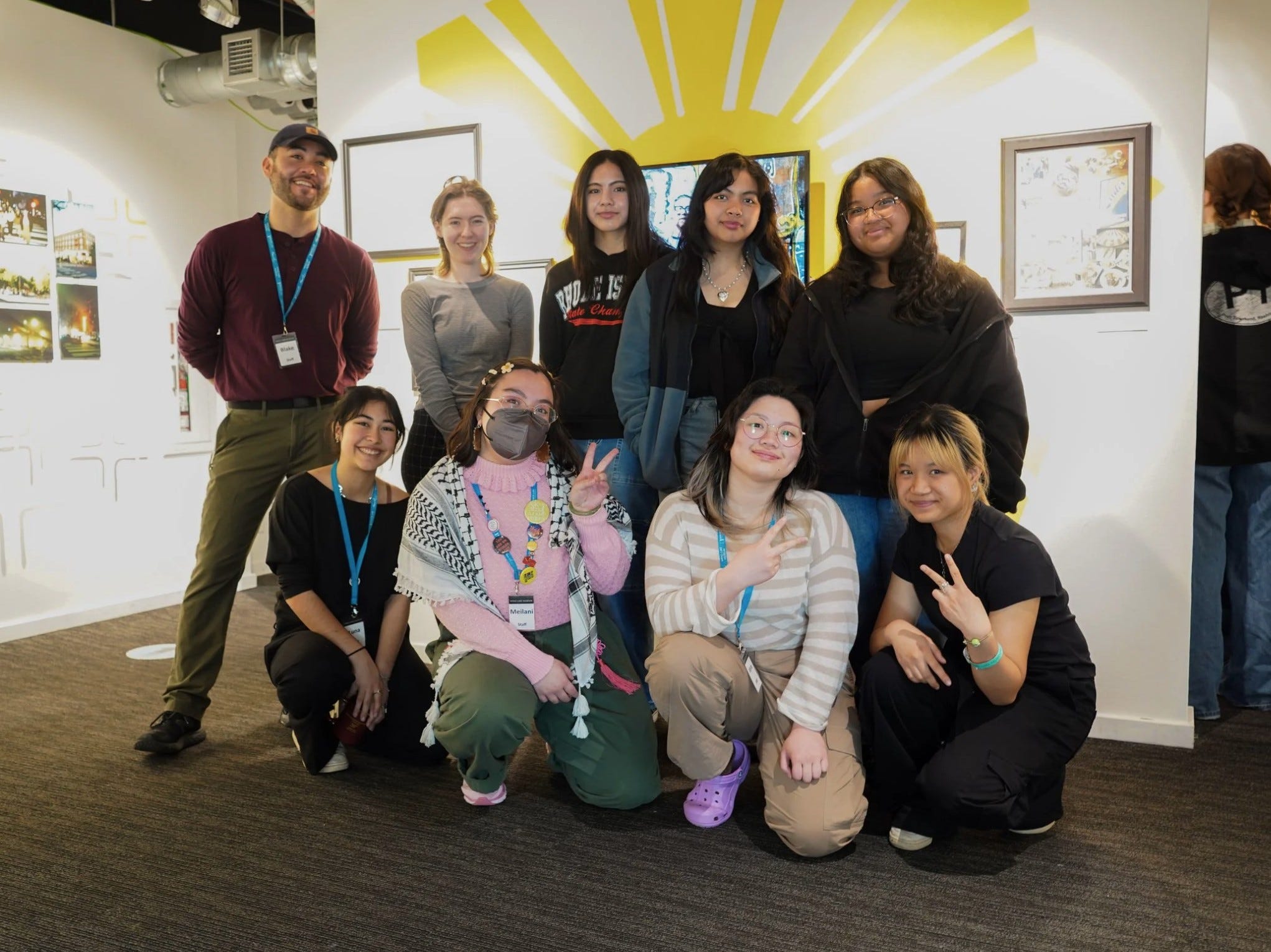
Some museums have been experimenting with and even living these ideas for years. The Wing Luke Museum in Seattle, for example, has developed a long-standing model of community-based exhibition development in which community members serve as co-curators, researchers, and storytellers throughout the entire process. Rather than asking communities to simply contribute content to an existing framework, the museum works collaboratively to shape the exhibition itself—from research questions to narrative direction. This approach has helped the museum maintain strong relationships with Asian and Asian American communities while continuously evolving its own institutional practices.
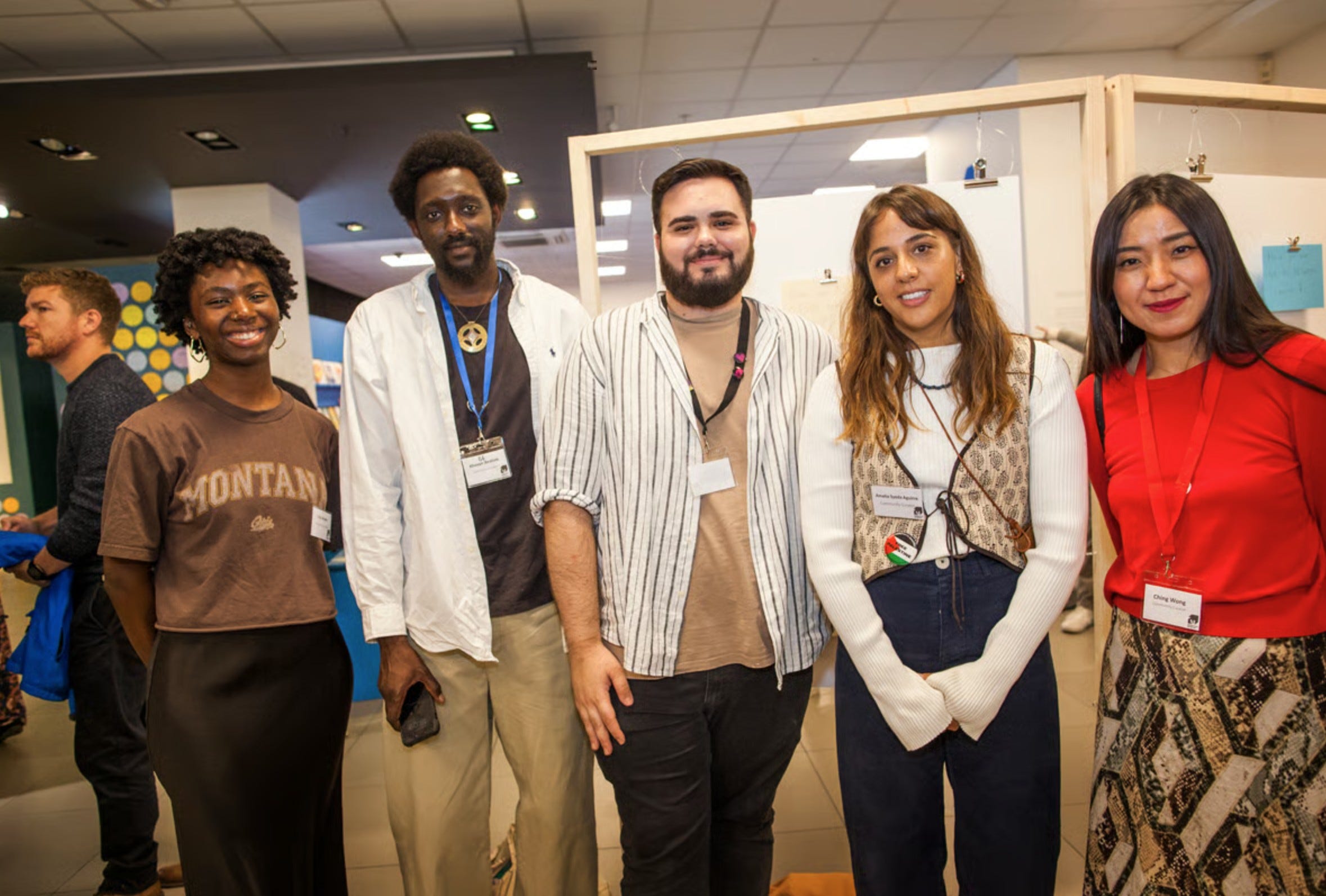
Another example can be found at the Migration Museum in London, where staff have cultivated ongoing relationships with immigrant and diaspora communities that extend beyond individual exhibitions. These partnerships influence not only programming but also the museum’s broader public narrative about migration and belonging. Over time, this sustained collaboration has deepened trust with communities whose stories are often shaped or contested in public discourse.
These examples remind us that participation is not a single program or initiative. It is a long-term practice of relationship-building and shared responsibility.
Participation as a democratic habit
Perhaps the most important insight from these examples is that participatory practice is rarely dramatic. More often, it is quiet and iterative. It emerges through repeated conversations, through learning and adjustment, through a willingness to recognize mistakes and try again.
And importantly, participation can still be cultivated even when institutions face political or structural constraints. In some contexts, the work may need to unfold in less visible ways—through sustained partnerships with community organizations, through educational programming that encourages dialogue rather than prescription, or through internal cultures that prioritize listening and shared learning.
These quieter forms of participation may not always be recognized as democratic work. But they matter deeply.
At its core, participation is not a department or a program. It is a posture—an orientation toward collaboration, humility, and shared stewardship of public institutions.
An invitation to reflect
For those of us working in museums and public-facing nonprofits today, the question is not whether participation matters. Most of us already believe that it does. The deeper question is how far we are willing to let participation reshape our institutions.
Where does real decision-making power currently sit in your organization?
Whose perspectives influence institutional priorities, not just programming?
Where might it be possible to share authority in ways that are meaningful rather than symbolic?
These are not easy questions. But they are essential ones if museums are to play a meaningful role in strengthening democratic life.
In the final post in this series, I’ll turn to the role of radical imagination—and why imagining different futures for our institutions is not a luxury, but a necessary step in building more democratic cultural spaces.
Kerri, I'm so glad this bit of thinking resonated with you and the work you're doing there at Fort Queenscliff. I hope you find other pieces I've written about this on my Agents of Change site (this is a topic I've been working on for many years, and have led workshops on this across the US and Europe). Love that you're advocating for genuine co-creation -- YES!!!!
This distinction between participation as program versus participation as practice is exactly what I'm wrestling with in a very specific context that of Fort Queenscliff, a 19th-century military heritage site on the Victorian coast of Australia that the Government is currently assessing for disposal. The community that lives beside it has no formal role in deciding its future. I'm working on a piece about what genuine co-creation might look like there, drawing on the ecomuseum model. Your framing of where authority actually sits, not just who's invited into the room is clarifying something important for me.